Faith-Based Credit Counseling
For some people, rebuilding credit isn’t just a financial decision — it’s part of a larger commitment to stewardship, discipline, and faith. If you’re looking for credit guidance that respects that, you’re not alone, and you’re in the right place.
Where "FIG" Comes From
FIG stands for Faith In God.
That’s not a marketing phrase — it’s the actual foundation FIG Restoration was built on. Founder Moncy Hawkins built this company after rebuilding her own credit and her own life, twice, and she built it around a simple belief: financial stability and spiritual stewardship aren’t separate conversations. They’re connected.
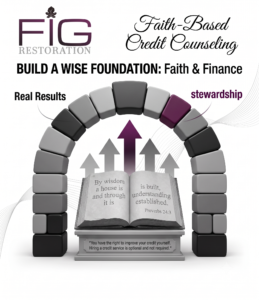
“By wisdom a house is built, and through understanding it is established.” — Proverbs 24:3
That’s the principle behind every credit strategy we build: wise, structured action as the bridge between hope and real results.
What Faith-Based Credit Counseling Actually Means Here
To be clear about what this is — and what it isn’t:
It is:
- Credit strategy and restoration guided by principles of stewardship, honesty, and accountability
- A firm that treats your financial situation with dignity, not judgment
- Professional, ethical, and fully compliant with federal credit reporting law
- A space where faith and financial discipline are allowed to sit in the same conversation
It is not:
- A religious requirement to work with us — we serve individuals and families from all backgrounds
- A substitute for professional financial or legal advice
- A guarantee of outcomes based on faith or otherwise
How This Shapes Our Approach
Stewardship over illegal shortcuts.
We’re not interested in gimmicks or schemes that promise to erase your credit history overnight. Real credit restoration takes structure and time, and we believe in doing that work honestly.
Accountability, both ways.
We hold ourselves accountable to ethical, compliant practice — and we ask the same commitment and follow-through from the households we serve.
Dignity over shame.
Many people come to us carrying real shame about their credit history. That’s not how we see you. Financial hardship is common, and rebuilding is possible — we walk that process with you, not over you.
Results vary based on individual credit history, participation, and creditor responses. No specific outcomes or timelines are guaranteed.
This Approach Is Part of a Larger Movement
Faith-based credit counseling is one expression of what we call the Established Families Movement — our broader calling to help households move beyond financial recovery into lasting stability, structure, and stewardship.
Frequently Asked Questions
Do I have to share your faith to work with FIG Restoration?
No. While our work is grounded in faith and that shapes how we operate, we serve individuals and families from all backgrounds who are looking for a structured, ethical path toward financial stability.
What does “FIG” stand for?
FIG stands for Faith In God. It reflects the foundation the company was built on, and the values — stewardship, accountability, and integrity — that guide how we work with every client.
Is faith-based credit counseling different from regular credit repair?
The credit restoration process itself follows the same professional, compliant standards as any ethical credit strategy firm. What’s different is the framework guiding the approach — with an emphasis on stewardship, honesty, and long-term stability rather than quick fixes.
Will my sessions include religious discussion?
Our sessions are focused on your credit strategy and financial plan. Faith shapes our values and how we treat clients — with respect, patience, and honesty — rather than being a formal part of the session structure itself.
How do I get started?
The first step is a Credit Strategy Session, where we review your credit profile and build a plan based on your specific goals and situation.

Ready to Take the First Step?
Whatever brought you here — faith, a fresh start, or both — you deserve a clear, honest strategy for your credit.
You have the right to improve your credit yourself. Hiring a credit service is optional and not required.